From living room to legacy

on
July 17, 2025

How a handful of volunteers and a coffee table helped shape one of LifeLine’s most transformative programmes

It began with 14 women in a living room. There were no desks, no whiteboards, and certainly no lesson plans. But there was food, friendship and a shared determination to belong.

LifeLine Projects, now one of London’s most recognised community-based charities, was still in its infancy when Teresa Walker invited a handful of South Asian mothers into her home to practise English.

What followed was more than a language class. It was the beginning of a movement grounded in empathy, listening and dignity.

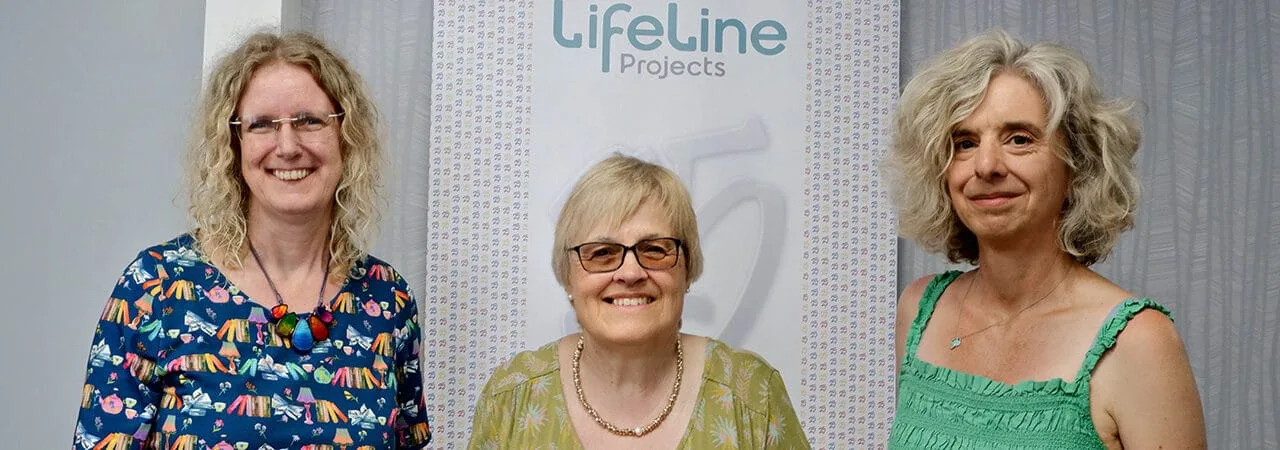
As LifeLine celebrates its 25th anniversary, we look back at the modest but deeply human beginnings of our ESOL classes, which would eventually evolve into the Creative English programme. Still one of our flagship services, Creative English owes much to the women who led those early sessions: Teresa Walker, Sally Dixon, Sue Griffin and Anne Smith, the latter of whom would eventually shape the programme into what it is today.

We spoke with them to reflect not only on what they built, but why it still matters.

Where it all began

LifeLine Projects

Can you tell me what you remember about those very first meetings? Why did it start in your living room?

Teresa

I was pregnant with my fourth child, and I was in my local library when I spotted a couple of South Asian mothers with very young children reading out children’s books to each other—I recognised them from my children’s school gates. I listened for a while and worked out that they were trying to learn English. I then asked them if they would like someone to listen to them read and they said yes.

After a week and a half, it became clear that meeting in the library wasn’t a practical long-term solution. So, I invited them round to my house, and I asked them if they would like to invite any friends. It ended up with 14 people attending twice a week.

In the early days, I would go to the library and photocopy the learning materials. It was an informal atmosphere. We encouraged sharing family updates with each other. We became so relaxed that we started acting out different scenarios and situations, like trying to get a child to hospital, speaking to a landlord, or making an appointment with the GP.
Finding each other

LifeLine Projects

When did you first hear about Teresa’s work, and what was it that made you decide to get involved?

Sally

She had met these women from her son’s school but she wasn’t overally confident in teaching. She knew I’d been a teacher at secondary schools and she asked if I could help her teach English. I told her I hadn’t taught it as a second language but I was happy to help.

We also had quite a lot of Kosovan refugees coming to the area at that time. What became apparent was the isolation some communities were going through.

Sue

I was taking a break from teaching at secondary school level and spent the time volunteering with a local church.

Teresa was there when the English programme began. I had just started working on it while I was between jobs, and I ended up taking the first offer that came along.

Anne

I first got involved in 2005, I was as a sessional worker on LifeLine’s youth programme at the time, but I also volunteered in the ESOL classes. Then I did some cover teaching. All the original people—Teresa, Sue, and Sally—were still there.

It started with kindness and acceptance. If you see a need, listen.

Barriers and how to get around them

LifeLine Projects

What were the biggest barriers these women faced?

Teresa

Vocabulary skills and doing things on their own with no language skills was really difficult.

A lot of these women came from strong communities that relied on each other, so they in turn relied on their communities to help them navigate the systems.

Sally

Firstly, both the lack of English and not understanding a different culture. They didn’t know how to get childcare or support with mental health issues.

Sue

There were lots of hidden barriers—dealing with family ties, coming to a whole new country, adapting to a whole new culture, and trying to navigate all these different systems.

Anne

They tended to be dealing with a lot; pressures from family members, some found it hard to leave the house, or just not knowing where to start.

If I were in their shoes, I know I’d find it difficult too—just committing to going to a session regularly can be a challenge in these situations.

How the classes worked

LifeLine Projects

What was a typical session like?

Teresa

There was a lot of food shared around! We talked about our families and our cultures.

 Although they weren’t like proper classes, it gave them confidence. They felt enabled to do things they weren’t able to do before.

Sally

We would have lots of shared meals—it was great to help give everyone an insight into other cultures. We had to break down walls and stereotypes.

The class structure was pretty informal. We didn’t have desks or anything—we just sat in a circle, a lot like Creative English is now. We would learn simple songs like “Head, Shoulders, Knees, and Toes”. We also encouraged relationships to continue outside of the classes.

Sue

It really depends on the class; we usually started at the level the class was at.

For example, we usually started with oral greetings and then moved onto writing later.

Anne

With ESOL, one of the biggest challenges is speaking and listening. When I joined, the classes were being run in community venues or church halls. There was a mixture of reading, writing, and speaking tasks.

When she understood her rights and stood up for herself, I knew we were making a difference.

The moments that matter

LifeLine Projects
Can you recall a moment when you knew the work was making a difference?
Teresa

The women needed more help legally—dealing with councils; submitting job applications; getting qualifications to get jobs. That was when we realised that we needed more support. The need was bigger than us.

Sally

I remember a woman who came to learn English. One day, she told me about the domestic violence she was experiencing. When she suddenly understood her rights and stood up for herself, I knew we were making a real difference.

She now runs her own beauty business, and her children have grown up into very successful adults. She said she can be confident now because she learnt what her rights were.

Sue

Some of us were becoming alert to some of the complex problems out there.

There was an Indian lady that was being abused and totally isolated. We tried to help her overcome some of her problems, but it wasn’t always easy due to language issues;  some of the women would end up communicating through their children instead.

Anne

I remember a lady in Hackney telling me how lonely she was. She said that learning English had made it easier for her to connect. That was the first time I heard it said explicitly.

The bridge to Creative English

LifeLine Projects

How did Creative English come about?

Anne

With Creative English, it was led by the original service users—they designed it. The first session using the title Creative English was in 2008. It was also refined during my PHD years.

Sue

I think these classes evolved because Anne took the ethos of showing care and kindness to the next level. I loved working on Creative English classes.

The most important thing is being motivated to care for people and helping them to fulfil their potential.

Our legacy, our future

LifeLine Projects

What do you want future volunteers to understand?

Teresa

I would say the biggest thing is, I was clueless back then too.

But it started with kindness and acceptance. If you see a need, listen.

Sally

The most important lesson is that no one person has all the answers.

You need to develop a good team—relationships are really important.

Sue

People come with as many skills as problems.

Anne

This isn’t about individuals—it’s more about the power of all of us.

The most important thing is being motivated to care for people and helping them fulfil their potential.

Our legacy, our future

LifeLine Projects

If you could go back and give yourself one message in those early days, what would it be?

Teresa

You can do this. It’s not about skills—it’s about heart.

Everyone can make a difference.

Sally

You don’t have to fix everything.

Anne

I would say to myself, keep going!

Because when I first started doing research on roleplaying and games in ESOL, I was told, why are you doing this?

People come with as many skills as problems.

A living ethos

Their stories may seem rooted in the past, but the values behind them—compassion, community and persistence—remain woven into the fabric of everything LifeLine does today. As we mark 25 years, it is clear that the strength of our future lies in the foundation they helped lay. The living room may have become classrooms, community halls and online platforms, but the ethos has remained the same.

“These women did not just teach English,” says Chief Executive Nathan Singleton. “They created a space for dignity and transformation. That spirit, of meeting people where they are and listening first, is exactly what LifeLine still stands for today.”

From shared meals to shared purpose, their legacy continues—not just in programmes, but in people.

Creative English

Creative English teaches simple conversational English through fun and games and an ongoing roleplay story inspired by soap operas.

Since 2013, it has helped over 20,000 learners not only develop conversational English skills, but also improve their confidence in their daily life.

Share on

These articles may contain testimonials by LifeLine staff members and service users of our programmes and/or services. These testimonials reflect the real-life experiences and opinions of such staff members/service users. However, the experiences are personal to those staff members/service users and may not necessarily be representative of all staff members/service users of our programmes and/or services. We do not claim, and you should not assume, that all staff members/service users will have the same experiences. Individual results may vary.

Testimonials are submitted in various forms such as text, audio and/or video, and are reviewed by us before being posted. They appear in the newsletter in words as given by the staff members and service users, except for the correction of grammar or typing errors. Some testimonials may have been shortened for the sake of brevity where the full testimonial contained extraneous information not relevant to the general audience.

The views and opinions contained in the testimonials belong solely to the individual user and do not reflect our views and opinions. Staff members/service users are not paid or otherwise compensated for their testimonials.