

It’s easy to assume that someone we see as confident must be confident all the time, and the same for those who lack confidence. But that’s often not true—confidence can fluctuate wildly depending on the situation and other factors. And for many young people, a decline in confidence can happen just when they need it most.
If you met one of our SW!TCH Ambassadors, you’d find them articulate, confident, and fully engaged. You might wonder how they manage to connect so deeply with young people facing complex challenges. What you can’t see at first glance are the challenges they faced at the start of their journey, and the experiences that shaped them into the person they are today.
The "unheard third"
A new report by youth agency Hark reveals that that 1 in 3 young people in the UK now say they have little or no confidence.
At the start of secondary school, 71% say they feel sure of themselves. But by age 16, that number drops sharply. The report calls this the “unheard third”—young people who begin to disappear just as the world starts asking more of them.
I too was one of those young people—confident in primary school but timid in secondary. By the time I was in year 7, I would never raise my hand in class.
Why confidence fades
It’s not about ability or intelligence. The report shows that confidence fades when young people aren’t given:
- Space to speak up
- Support to try
- Challenges to grow
Those with the least confidence are also the least likely to ask for help. They stop putting their hands up. They shy away from opportunities. Not because they can’t succeed, but because they no longer believe they can.
Action breeds confidence and courage. If you want to conquer fear, do not sit home and think about it. Go out and get busy.
Dale Carnegie
Challenge, not compliments, builds confidence
A recent HuffPost piece supports these findings: praise alone doesn’t build confidence.
Instead, it’s challenge—doing something new or uncomfortable and coming out the other side knowing they did it themselves—that makes the difference. Whether it’s trying a new sport, volunteering, or speaking in front of others, confidence is built through action.
The psychologist Dr. Lucie Hemmen explains: “Confidence grows when a young person stretches just beyond what feels safe and realises, they can handle it.”
What we see
At LifeLine, we meet many young people on this journey. They may appear confident at first, often loud, sometimes even challenging.
But beneath the surface, they’re struggling. Behind the bravado is low self-belief, anxiety, and deep feelings of isolation. This is demonstrated by the responses to the WEMWBS questions the young people give us.
Before mentoring with SW!TCH...
Source: SW!TCH Futures programme data, LifeLine Projects
With time and trust, that mask drops. They begin to open up and that’s when real growth begins.
I was always looking outside myself for strength and confidence but it comes from within. It is there all the time.
Anna Freud
Through the confidence dip
Change is never instant. Often, there’s a dip—the young person may feel stuck, lose motivation and question the point of trying. This is when a mentor matters most. Someone who:
- Listens without judgment
- Sees their full potential and encourages them to see it too
- Stays, even when things are tough
- Reflects their journey and celebrates their successes with them
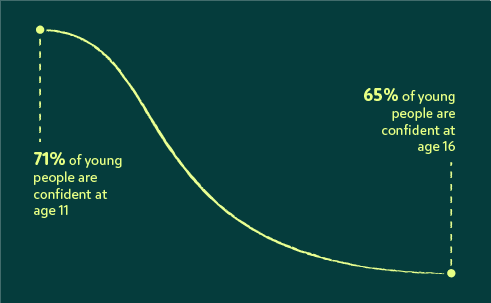
Source: Listen Up, Hark
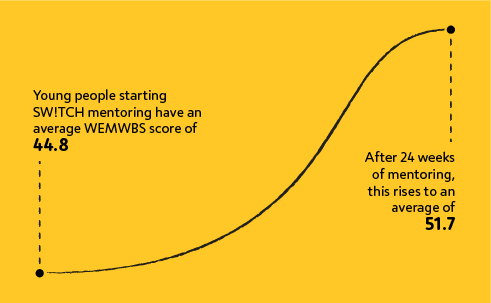
Source: SW!TCH Futures programme data, LifeLine Projects
How SW!TCH helps
SW!TCH helps young people rebuild their confidence through purpose. Not through praise, but through experience. We do this through:
- One-to-one mentoring
- Creative and community projects
- Youth-led events and leadership roles
These experiences help young people see themselves as capable, valued, and full of potential.
When they lead a project, speak at an event, or support a peer, something shifts. They begin to believe they have something to offer.










Confidence is belonging
Confidence isn’t about being loud. It’s about:
- Knowing you belong
- Feeling seen and trusted
- Being capable of making your own decisions
Looking forward
Young people today are navigating immense pressure — from social media, identity struggles, and mental health to the rising cost of living. But when they’re given:
- The space to explore who they are
- The support to try again
- The chance to contribute
It takes time and it can often by a bumpy ride. But one thing is certain: Young people’s confidence can be restored.