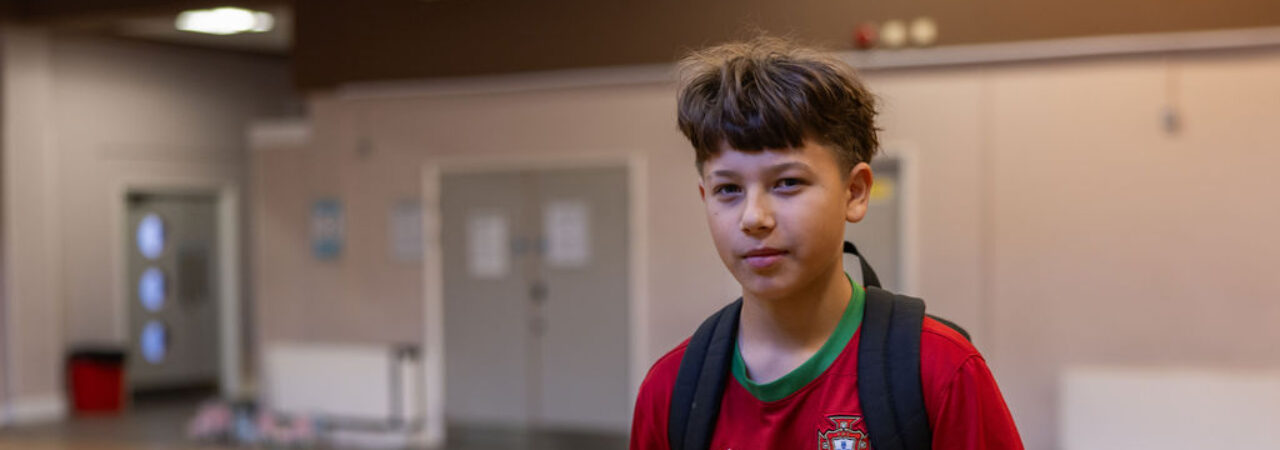

September is a month of transition for many young people. After the summer break, children and young people return to education, often to new teachers, new routines, new expectations and, for some, an entirely new school. We tend to think of this simply as going back to school, but transitions can be much more significant than we realise.
Starting nursery, starting school, moving to secondary school, leaving education, and moving into employment or adulthood are presented as the ordinary milestones on an individual’s journey. Yet each one changes a young person’s relationships, expectations, routines and, importantly, where they find influence and belonging.
These moments matter because change can create vulnerability. A child or young person can be perfectly capable of managing one stage of their life but then still struggle as the environment around them changes.
That is why I think we need to look at readiness more broadly. I remember all too well the nerves of starting a new school and, more recently, being on tenterhooks as my youngest child went off to their first day at “big school”.
I see this in the work of our Little Learners nurseries. School readiness is sometimes reduced to whether a child knows their letters and numbers. While those things matter, so do the less visible skills that help a child manage a new environment—confidence, communication, emotional development, independence, and the ability to cope when things do not go as expected.
Even practical things such as managing the toilet, getting dressed, putting on shoes, or eating independently can make a difference to how confidently a child enters school. Our nursery teams work on these skills as part of everyday life rather than treating school readiness as something that starts a few weeks before September.
There is a lesson here that goes beyond the early years—if we know that change can create vulnerability, why wait until a young person is struggling before we offer support?
When we talk about preventing problems for young people, we often focus on what happens when those problems become visible. When a young person becomes involved in violence, starts disengaging from education, or struggles with their wellbeing, support is put in place. That intervention is important. But by that point, we may already have missed opportunities to help.
The move from primary to secondary school is a good example. We often describe it as simply moving schools, but to a young person, it can be a much bigger shift.
During primary school, parents, teachers, and other trusted adults tend to play a central role in a child’s world. But as children move into adolescence, their peers instead become increasingly important. Acceptance, identity, and belonging become more closely connected to their relationships with the young people around them. While this is a normal part of growing up, it can also create vulnerability.
A young person who feels connected and supported has more to fall back on when relationships and influences begin to change. Someone who feels isolated or uncertain may look elsewhere for that sense of belonging.
This is one reason I believe we need to think about youth violence prevention much earlier. By the time a young person is known to a service because of violence or exploitation, there may have been earlier signs that they were becoming disconnected from school, adults, or their community.
The same applies to other challenges. Disengagement from education, poor wellbeing, the formation of misogynistic attitudes, and becoming NEET are rarely sudden occurrences. Instead, they are often preceded by these kind of large changes, even if the effects are not immediately obvious.
A young person can be academically capable but anxious about making friends. They can have good friendships but struggle with new expectations. They can appear confident while feeling that they no longer know where they fit.
This is why support cannot simply begin when a problem reaches crisis point.
Mentoring can be particularly important. As young people become more influenced by their peers, having another trusted adult in their lives can provide something different—someone who knows them, who believes in them, and who can help them navigate change without making decisions for them.
But proactive support cannot be provided by one organisation alone. Parents and carers, nurseries, schools, youth organisations, mentors, and local services all have a part to play. When those relationships connect, they create something much more valuable than any individual intervention—they create a community around a child.
This is why I see a connection between our work with children in Little Learners and our work with older young people. The circumstances may be different, but the principle is the same—what we do early can make a difference later.
Perhaps that is what prevention should really mean—not waiting for a problem to become serious enough to need intervention, but noticing when something is changing, staying connected, and offering support while there is still time to make a difference.
At LifeLine Projects, we talk about creating communities where young people and families thrive. To me, this means thinking beyond what happens when something goes wrong; it means building the relationships and support around children and young people before they reach a point of crisis. In that sense, prevention is really proactive care.
It is about being there before a crisis, not simply responding to one.