“Sustainability” has become one of the most commonly used words in the charity sector. Funders ask about it; organisations include it in funding applications; strategies are built around it. Yet, I sometimes have to wonder whether we’re all talking about the same thing.
Often, sustainability is measured by whether a programme can continue. Will the funding still be there? Can delivery carry on? Does the organisation have enough stability to plan ahead?
But there is another understanding of sustainability that sometimes appears in discussions about funding—the idea that a programme helps create a community and, over time, that community becomes self-sustaining. The funding ends, the programme comes to a close, but the relationships, activities, and support networks continue on their own.
It’s an attractive idea. And, sometimes, it happens.
People form friendships. Neighbours support one another. Communities develop their own momentum. The strongest communities are built on people helping people, rather than relying solely on organisations and programmes.
But I think we should be careful not to assume that a thriving community is the same thing as a community that no longer needs support.
Many of the people charities work alongside are facing challenges precisely because they lack strong support networks. They may be experiencing loneliness, isolation or difficult life circumstances. They may have limited confidence or struggle to connect with others. Some have few friends, little family support and no real sense of belonging within a wider community.
In those situations, relationships do not always sustain themselves without help.
Communities are incredibly important, but they often need support too. They need places to meet. They need opportunities to connect. They need people who can coordinate activities, build relationships and help remove barriers that prevent participation.
In other words, they often need organisations like LifeLine.
That’s why I believe sustainability should mean more than simply asking whether a programme can eventually survive without funding. Perhaps the better question is whether we are sustaining the conditions that allow communities to thrive in the first place.
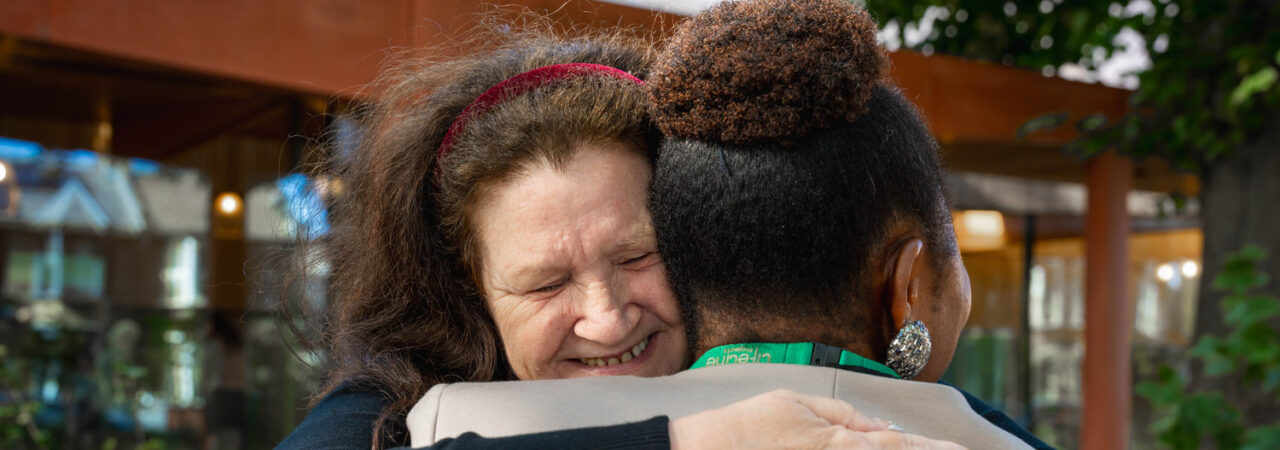
At LifeLine, we see this through our Community Befriending programme. A trained volunteer spends time with someone who may be feeling lonely or disconnected from the people around them, and the immediate benefit of that relationship is plain to see.
But what interests me most is what often develops around it.
One example is Stella, who became involved with Community Befriending during a period of isolation and uncertainty. Through building connections with others, she developed greater confidence, became more involved in her local community, and formed relationships that continued beyond the original support she received.
Her story is a reminder that while programmes may have a defined beginning and end, the relationships and opportunities they create can continue to shape people’s lives long afterwards.
Over time, confidence grows, new connections form, and people become more involved in their communities. Some begin taking part in activities they would never previously have considered. Others form friendships and support networks that extend beyond the original programme.
These outcomes matter, but they do not happen overnight, and they rarely happen by accident. They are built through time, trust, consistency, and support.
Most importantly, they represent change. The aim of a good programme is not simply to maintain the status quo. It is to help people develop new relationships, build confidence, and engage with opportunities that may previously have felt out of reach.
This is one of the reasons I sometimes question how sustainability is understood within our sector. When relationships are flourishing and communities are becoming stronger, it can be tempting to assume the work is done.
Yet those same relationships often continue to benefit from the support, coordination, and opportunities that organisations provide.
In many respects, the very changes we hope to achieve create new possibilities and new challenges. People take on greater responsibilities, engage in new activities, build wider networks, and become more active within their communities. Those developments rarely happen in isolation. They often continue to depend on welcoming spaces, trusted relationships, and organisations that can provide encouragement, coordination, and opportunities to participate.
Positive change, therefore, should not be mistaken for the absence of need. More often, it is evidence that the right conditions are in place for people and communities to continue growing. The challenge for organisations is not simply to create change, but to help sustain the conditions that allow that change to flourish over time.