When Vanita first arrived in the UK from India, she brought with her a degree in accountancy and a strong determination to succeed. But there was one major challenge: language.
“I spoke very little English when I moved here,” Vanita recalls. “You think it is going to be easier once you arrive, but many people here do not speak a second language, so communication was really difficult.”

Vanita had settled in Goodmayes in the London Borough of Redbridge to join her husband, at a time when the area was undergoing rapid change. Traditional English households—often small families in large houses—were making way for larger families moving in from abroad.
“Most of the women I knew were from Pakistan or Bangladesh,” she explains. “They often had three or four children, plus elderly parents, all living under one roof. They had very little spare time, and in some cultures, women were not encouraged to be independent. There just were not many opportunities to learn English.”
Then one day, everything changed.
“I was walking to Tesco when someone handed me a leaflet. It was about an English course run by LifeLine.”
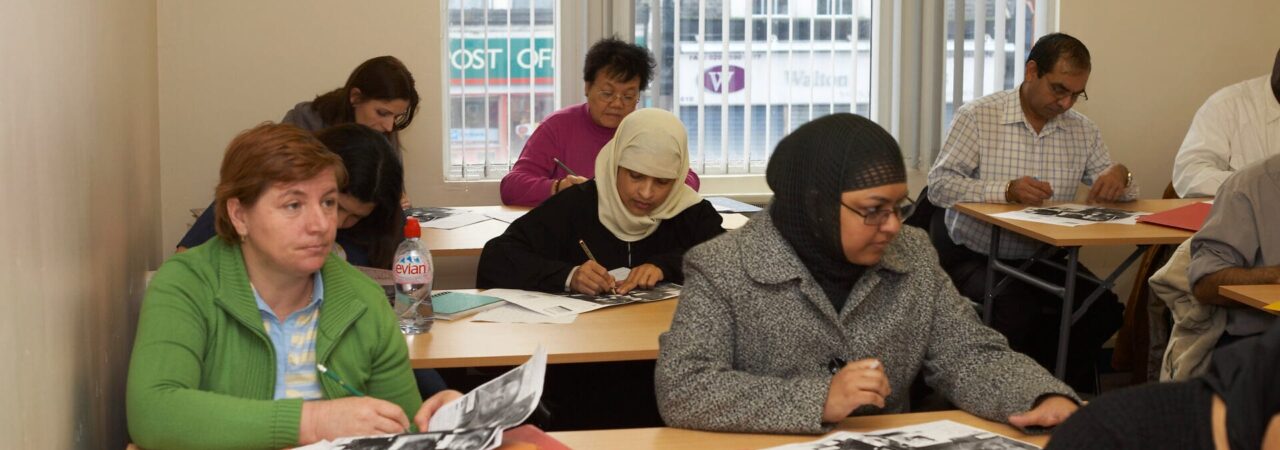
That leaflet led Vanita to enrol in a Level 1 ESOL course, taught by Rachel, one of LifeLine’s first English tutors.
“My speaking skills were not great at first, but I caught up quickly. The first lesson was all about greetings. That was the start of everything.”
She soon progressed to Level 2 and joined a computer class. But the lessons offered more than just education. They built community.
“Rachel used to arrange dinners for the students. Everyone would bring a dish. We played games and laughed a lot. I became good friends with all the teachers. I still meet up with Rachel to this day.”
As her confidence grew, Vanita felt ready to pursue further education. She enrolled at Barking College to study accountancy, all while continuing her English lessons. After graduating, she landed her first job as a bookkeeper at a restaurant in Chelsea.
Today, Vanita works for a London-based tax consultancy. She manages over 150 clients and communicates directly with HMRC on their behalf.
“My communication skills have to be excellent now. You really have to live a language to learn it. That is why remote learning does not work for everyone.”
Looking back, Vanita is clear about what made the biggest difference.
“Confidence was the greatest thing LifeLine gave me. It changed my life completely. There is no way I would have the career I have today without it. When I go to job interviews, I always mention my LifeLine journey. It shows what I have learned.”
As LifeLine Projects celebrates its 25th anniversary, Vanita’s story is a reminder of the powerful and lasting impact of its earliest services. That original ESOL programme has since grown into Creative English, a national model built on the same foundation of inclusion, confidence and community.
“Vanita’s journey is a powerful example of how supporting someone at the right moment can transform their future,” says Nathan Singleton, CEO of LifeLine Projects. “While she initially joined our ESOL programme to improve her English, what she found went far deeper. She gained skills in IT and childcare, but more importantly, she found friendship, support, a community, and a sense of belonging. Her story shows how confidence, connection, and care can open doors that once felt closed.”
What began with a leaflet outside Tesco became the start of a new life based on communication, confidence and community.
“It was a turning point. It changed everything.”