
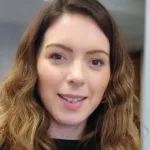
This month, we’re talking with Jenna, Young People’s Services Manager, who joined us last year. Jenna leads, manages and coordinates our work with young people through our various SW!TCH programmes.
Can you tell us a bit about yourself?
I grew up in Wanstead—it was a bit rough, local schools constantly having fights. You’d hang on the streets or at the flats, nothing for young people to do. Some of them had souped-up cars, with those LED under-glow lights—there was lots of joyriding. It was a London suburb with a lot of kids with nowhere to go, all doing nothing.
I came from a largish family, one of five. There were four girls and one boy and I’m the eldest. I think being the eldest gave me patience; it taught me to fight for what you want. My parents got divorced when I was 13 and it hit my mum really hard. My brother had Downs syndrome, so my mum’s attention was focused on caring for him. Suddenly, I had a lot of responsibilities: it was my job to help raise my siblings.
My first job was in Argos working in the warehouse. I was 15 years old doing picking and packing. I didn’t finish school because of bullying, which meant I didn’t go on to college due to not having any qualifications. Still 15, I moved out because I was rebellious and fighting my mum—home life just wasn’t working. I had so many things going on in my life but my mum didn’t have time to support me. I was lucky enough to have my friend’s family take me in. It taught me that there are kind people out there. I was with them until I was 21 and it was the best time in my life. It was like an open house for troubled teenagers, a really friendly atmosphere.
After I was made redundant at Argos, I visited a local charity to help me with job searches and writing a CV. I spent so much time there and they ended up taking a liking to me, so they offered me a job as an advisor. I worked with them for eight years and it gave me real insight into what stops people progressing into employment.
When I joined LifeLine, I really wanted to help young people access opportunities and move ahead. I’m taking what happened to me as a teenager and giving that back.
What's your role at LifeLine?
I’m Young People’s Services Manager. I lead our team of Youth Development Workers who are providing mentoring, workshops, and positive activities for young people that are on the edge of poor mental health, serious youth violence, or school exclusion.
What kind of problems do you deal with?
My main concern is ensuring my team feel supported. I’m always advocating for them and making sure we’re fully staffed. I’m also responsible for handling safeguarding issues with the young people and liasing with schools and partners.
And in my private life, I spend my time being a mum.
How long have you been in your role?
I’m celebrating my first anniversary at LifeLine right now—time really flies here!
What skills do you need to do the work you do?
I’m juggling a lot of plates. You have to be patient, of course. And you need to be good at nurturing others and compassionate. Plus being effective at time management and good at supporting young people and your team. I also remember where I came from and what I’ve previously done, which is a lot like what my team are doing daily.
What do you like most about your job?
That I can see the end result. I get to see a young person’s journey, that moment where there life is turned around. These are rare moments of joy.
Can you describe your first day at LifeLine?
Everyone was so warm and welcoming. They all have their own quirks, lots of different personalities. The hiring process is great, such variety but we all have the same end goal.
What do you think other people should know about LifeLine?
We have an open door policy—someone’s always available to help you with all types of support.
What one word would you use to describe yourself?
Strong.
What's the one thing about you few people know?
I wrote a poem that got printed. It was about my brother and Downs syndrome.
Do you agree that people are basically good?
Everybody is good because they are born good.