On the 7th–11th September 2026, FaithAction hosted their fifth annual Faith in Partnership Week, highlighting and celebrating cross-sector working between faith groups and statutory bodies. This form of colloboration has immense potential to drive change for vulnerable and marginalised peoples in the UK, but there is still a lot more that can be done.
A department of LifeLine Projects since 2006, FaithAction works to unlock the potential of faith to bring about a healthier, more just society, where more people belong. By collaborating with a national network of grassroots faith-based and community organisations, they help equip the sector with resources, expertise, and connections to help to create strategic, long-term solutions to societal problems.
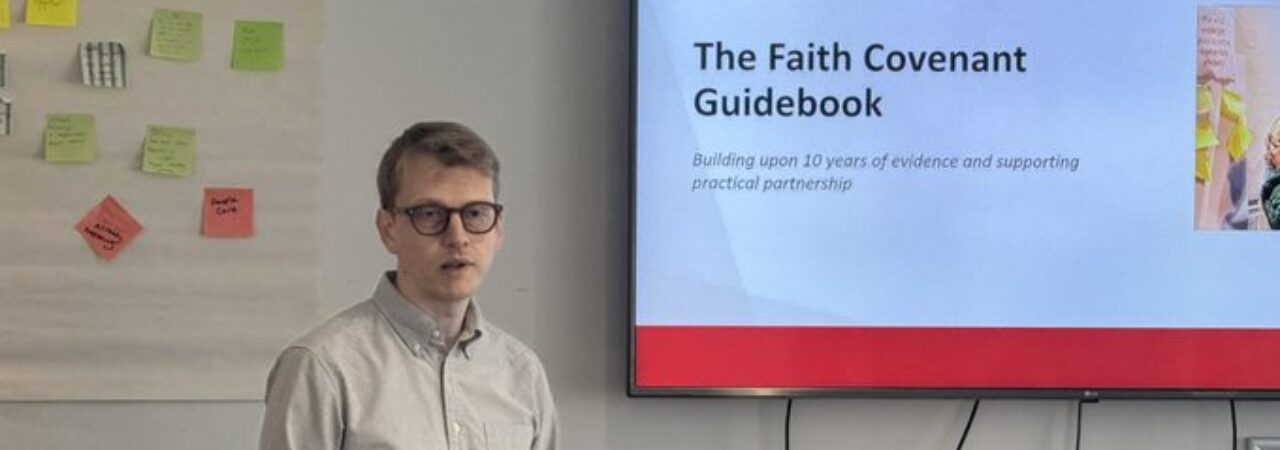
As part of the Week, FaithAction launched the new Faith Covenant Guidebook, providing key information about the Faith Covenant and how it can be implemented. The Guidebook covers what the covenant is, why you’d want to sign it—including highlighting its achievements over the years—and how to set yourself up for success.
The Faith Covenant was designed in partnership by FaithAction and the All-Party Parliamentary Group on Faith and Society to be a joint agreement between public-sector bodies and faith communities that strengthens trust and partnership working. Initially created in 2014 to support relationships between faith groups and local councils, it has expanded over the years to cover 33 partnership areas across England and Scotland.
Faith Covenants are also a key way for faith groups to work hand in hand with their local authorities, reflecting the core principles of Faith in Partnership Week.
The Guidebook forms the second part of an ongoing project to better understand and strengthen Faith Covenants across the UK, funded by the Sir Halley Stewart Trust.
This learning is built upon the findings of an independent evaluation of the Faith Covenant, launched earlier this year. The evaluation formed the first part of this project and the research was carried out by Coventry University and the Centre for Inclusive Evaluation.
Whilst the Faith Covenant has been around for over a decade, it had never been formally evaluated, so a range of Covenant areas were consulted to find out, “Is it really working?” The findings showed a clear and positive outcome—the covenant had achieved many good things across the country, and 75% of those surveyed said it had improved trust between faith communities and public-sector partners.
However, it was also clear that there were areas that could still be strengthened. Covenant areas asked for a clearer national steer on governance and accountability around the Covenant, as well as examples of how to best implement it.
By building upon learning from ten years of Covenant activity plus the evaluation findings—including 26 in-depth interviews with Covenant representatives—FaithAction has now produced the Guidebook as a first step in diving into some of these areas in more detail, including:
- WHAT is a Faith Covenant?—key information on the purpose of Covenant agreements, the origin of the initiative, and what’s happened over the past decade.
- WHY adopt a Faith Covenant?—an exploration, from the perspective of both faith-sector and statutory partners, of what is to be gained from pursuing an agreement, including “Why now?”, which connects with ongoing national developments, such as local government reorganisation and the Civil Society Covenant.
- HOW to build a strong Covenant—a deeper dive into how to set up for success, including core principles and how to lay the foundation for good governance and accountability when working across sectors.